
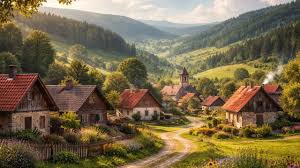
In the wide world of language and culture, certain words carry meaning far beyond their literal definition. Sodziu is one such word in Lithuanian — simple in appearance but rich with tradition, emotion, and heritage. Whether encountered in daily speech, literature, or cultural narratives, resonates deeply with Lithuanians and those curious about Baltic cultural identity.
At its core, refers to rural life — a village, a homestead, or the collective heart of countryside traditions. But its meaning goes far deeper: it symbolizes belonging, connection to nature, community harmony, and the slow rhythms of life that define Lithuania’s rural regions. In this long article, we will explore the essence of sodziu, its origins, cultural significance, modern usage, and why it remains an enduring part of Lithuanian identity.
Understanding the Literal Meaning of Sodziu
The word sodziu originates from the Lithuanian term, which refers to a rural settlement, village, or farmstead. In a literal sense, sodziu means a cluster of homes set in nature, often surrounded by fields and pastures, where families lived, worked the land, and upheld traditions passed down through generations. The roots of the word are tied to agricultural life — specifically to the cultivation of land, seasonal cycles, and human connection to the earth.
Unlike generic terms for countryside or village, sodziu evokes a sense of rootedness, stability, and community. It isn’t just a place on a map; it is a lived experience — a shared cultural space where people worked together, celebrated seasonal changes, told stories around fires, and preserved customs that shaped their identity.
The Etymology and Linguistic Roots of Sodziu
Delving into language history clarifies why means more than “village.” The word links back to older Baltic language structures and possibly to Proto‑Baltic or Indo‑European roots related to sodas (garden or orchard). Over centuries, as rural life became central to Lithuanian culture, these linguistic elements blended into forms that described both physical settlement and the broader way of life within it.
In Lithuanian grammar, may appear in different forms depending on the case, reflecting the language’s inflected nature. Regardless of the grammatical variation, the concept remains consistently tied to rural landscapes and traditional livelihoods.
Sodziu as a Symbol of Heritage and Culture
In Lithuanian culture, sodziu carries symbolic weight far beyond its literal meaning. For centuries, village life formed the backbone of society — shaping community structures, agricultural practices, seasonal festivities, and interpersonal bonds. The traditional was not merely a collection of farmhouses; it was the epicenter of customs, celebrations, and collective memory.
In the context of folklore, songs, and storytelling, often appears in tales of love, struggle, harvest, and celebration. Folk musicians, poets, and writers used it as imagery for home, belonging, and continuity. Even in the face of historical upheavals, such as periods of occupation and social change, the concept of sodziu remained a symbol of resilience and cultural endurance.
Traditional Life in a Sodziu Community
A world defined by is one where life unfolds with nature’s rhythms. Families in these communities lived close to the earth: sowing seeds in spring, tending crops, harvesting in autumn, and preparing for winter through shared effort. The work was communal, and the reward was mutual — a sense of unity that transcended individual achievement.
villages emphasized cooperation and support. Neighbors helped each other with haymaking, food preparation for seasonal festivals, and child‑rearing. Social life never strayed far from nature: traditional celebrations like the midsummer festival (Joninės) and annual harvest festivities were rooted in crop cycles and lunar months. These traditions ensured that sodziu was not just a physical space, but a container of cultural memory.
Modern Usage and Cultural Revival
As Lithuania urbanized over the 20th and 21st centuries, many young people moved to cities in search of education and work. Yet sodziu has not faded from the nation’s collective memory. Instead, it has taken on new layers of meaning — appearing in literature, art, digital media, and even tourism.
For modern Lithuanians, sodziu often evokes nostalgia — memories of summer holidays spent visiting grandparents’ homes, family celebrations, or even imagined idylls of simpler living. The word has found its way into everyday speech and online culture, where it appears in social posts, captions, and humorous reflections about life’s twists and turns.
Furthermore, heritage initiatives are reviving interest in traditional living. Cultural festivals, eco‑tourism experiences, and rural homestead stays encourage visitors to reconnect with values such as cooperation, sustainability, and slow living — all hallmarks of sodziu life.
The Emotional and Social Significance of Sodziu
What makes sodziu particularly compelling is the emotional resonance it carries. More than a descriptive term, it often carries an implied story — of ancestors, family traditions, collective memory, and cultural continuity. For many Lithuanians, especially those in the diaspora, the word functions as a linguistic anchor — a reminder of roots and belonging that transcends geographical distance.
In speech, using can evoke a reflective or nostalgic tone, particularly when describing life lessons, rural memories, or emotional connections to family heritage. It has also been embraced in digital spaces as a poetic, expressive device — a way to convey deeper feeling in a short phrase.
Sodziu in Literature, Art, and Folk Expression
Lithuanian literature and art have long drawn upon rural themes, and sodziu frequently appears as a motif in these creative expressions. Writers use it to frame narratives about identity, memory, and the passage of time. Folk songs, many rooted in agrarian life, evoke settings as places of celebration, sorrow, or reflection.
Artists and filmmakers also use this concept to explore the tension between modern life and traditional values. In visual storytelling, the often emerges as a backdrop for narratives about community, cultural heritage, and personal transformation.
Why Sodziu Still Matters Today
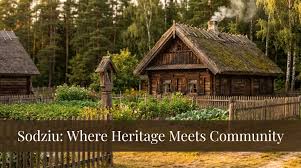
In a rapidly globalizing world, words like sodziu offer something rare: a connection to cultural history and an invitation to slow down. While urban life and digital technology dominate much of contemporary experience, the idea of sodziu reminds us of humanity’s deeper ties to land, seasonal rhythms, and community.
Interest in sustainable living, heritage preservation, and cultural tourism continues to grow, and the concept of fits squarely within these global trends. It offers a model — not just of a physical village — but of values worth preserving: cooperation, shared heritage, connection to nature, and respect for community.
Conclusion: The Enduring Legacy of Sodziu
In every corner of Lithuania, from rolling meadows to quiet woodlands, the idea of lives on — not merely as a word but as a cultural expression of identity and belonging. It encompasses the land and the people who lived in harmony with it, working together, celebrating traditions, and creating memories that transcend generations.
Although modern life has transformed many rural landscapes, the essence of sodziu remains relevant. It challenges us to rethink progress, to cherish our roots, and to value the stories carried in small words that hold big meaning. Whether used literally to describe rural homesteads or metaphorically to evoke reflection and identity, remains a powerful symbol of Lithuania’s cultural heart.
FAQs About Sodziu
1. What does sodziu literally mean?
Sodiu refers to a traditional Lithuanian village, rural homestead, or countryside settlement — rooted in agrarian life and community identity.
2. Is sodziu still relevant today?
Yes — the concept of remains meaningful in cultural heritage, speech, literature, tourism, and digital culture.
3. How is sodziu used in everyday language?
Lithuanians may use it literally to describe rural settings and metaphorically to evoke nostalgia, tradition, or identity.
4. Does sodziu have emotional significance?
Absolutely — the word carries emotional weight, often associated with heritage, belonging, reflection, and memory.
5. Is sodziu unique to Lithuanian culture?
While other languages have terms for villages, sodziu is uniquely tied to Lithuanian cultural identity, tradition, and historical rural life.
