
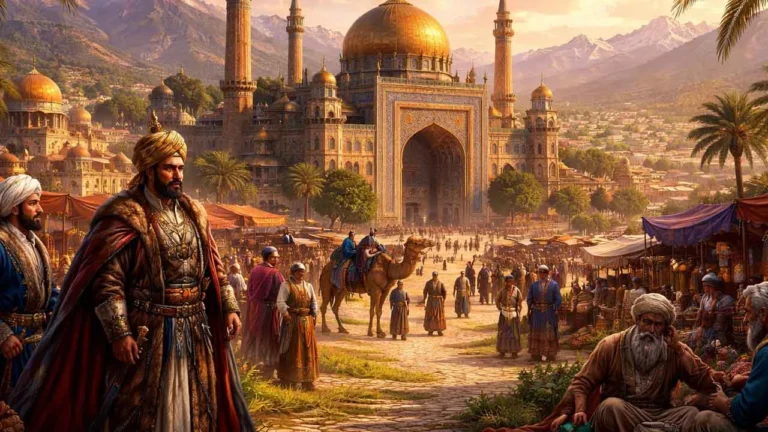
Have you ever stumbled upon a word that sounds mysterious and unforgettable, yet you couldn’t quite place its meaning? Turaska is one of those rare terms. It isn’t commonly found in everyday conversation, but when you dig into its origins, history, and cultural significance, you discover a word that offers a fascinating window into ancient worlds, language evolution, cultural exchange, and identity.
In this article, we explore Turaska from several angles: its linguistic roots, historical context, appearances in literature, modern interpretations, and the surprising places where it still shows up today. This comprehensive exploration will help you truly understand what Turaska means and why it matters.
What Does Turaska Mean?
At its core, Turaska is a term rooted in ancient Indian languages and literature, especially Sanskrit. Scholars believe that it originally referred to people from Central Asia — especially Turkic tribes — who interacted with the Indian subcontinent through trade, warfare, and migration. In Sanskrit texts, variants of the word such as Turushka or Turaṣka were used to describe foreign peoples from the northwestern regions.
The meaning of Turaska changed over time. It was not always just a neutral label. In some texts, it simply referred to foreign tribes — especially those with horses, mobility, and military prowess. In others, it took on symbolic or descriptive roles, reflecting how ancient writers viewed outsiders.
There are a few ways Turaska has been understood:
- Ethnographic term for Turkic or Central Asian peoples in ancient Indian literature.
- Descriptor of outsiders in cultural and historical texts.
- A borrowed or evolving word that appears in modern contexts with new meanings, sometimes even in common language translations.
Turaska’s Linguistic Roots: From Sanskrit to Today
To understand Turaska, it helps to look at its linguistic background. The word is closely connected to the Sanskrit term Turuṣka (तुरुष्क), which was often used to describe non-Indian tribes living beyond the traditional frontiers. This term was part of a broader set of names used in ancient South Asia to identify different ethnic groups, especially those perceived as foreign or culturally distinct.
In many cases, Turushka was linked to Turkic peoples from Central Asia — nomadic groups known for their swift cavalry and military tactics. The Sanskrit construction often reflects descriptive naming traditions of the time, where terms were adapted from foreign words and given local phonetic forms.
Interestingly, because language changes over time, Turaska has also taken on modern linguistic roles. In Bengali, for example, the word turaska is literally used to mean “Turkey” — translated and adapted into Bengali phonetics.
This shows how a word can travel across cultures, meanings, and time — from ancient ethnic labels to modern geographical references.
Turaska in Ancient Texts: A Window Into the Past
The ancient Indian literary and historical record mentions Turaska (or its variants) in several places. These references reveal how people from the Indian subcontinent understood and described foreign groups throughout history.
One of the earliest mentions is found in legendary Sanskrit works like the Kathāsaritsāgara, an 11th-century collection of stories. In this epic, Turuṣka refers to a people or kingdom that engaged in military conflict with Indian rulers, painting them as powerful outsiders.
Other Sanskrit works, such as the Kāvyamīmāṃsā, refer to Turaska as distant regions or tribes beyond the Indian borders. This shows that Indian scholars were aware of distant lands and incorporated them into their literature.
These appearances aren’t just names dropped into stories. They illustrate how literature served as a record — sometimes poetic or symbolic — of historical realities like trade routes, religious exchange, and intercultural conflict.
Historians also note that in some Sanskrit inscriptions and poems, the term was connected with invading groups from Central Asia, especially during periods of political upheaval in medieval India. In chronicles from the 12th century, Turaskas are mentioned when describing northwest invaders, showing how foreign groups were perceived at different times.
Turaska and History: Conquest, Culture, and Exchange
Turaska wasn’t just a neutral term. In many ancient texts, it became associated with groups that arrived in India — sometimes as warriors, sometimes as merchants, and sometimes as rulers — with lasting influence.
Historians link the word to Turkic and Central Asian tribes that made periodic incursions into India’s northwestern regions. These groups brought not only new military practices but also cultural and technological exchanges. Over time, some of these peoples became deeply woven into the political and social fabric of medieval India.
For example:
- Turkic leaders and warriors who came into contact with India were often identified with words derived from the same root as Turaska.
- These interactions influenced everything from military strategy to artistic motifs in regional art and architecture.
As periods like the Delhi Sultanate took shape, foreign rulers — often of Turkic origin — became powerful regional authorities. Though not all of them would be called Turaska in every source, the legacy of such interactions continued in cultural memory.
This history shows that Turaska isn’t just a word for outsiders — it represents centuries of movement, conflict, cooperation, and cultural blending across Asia.
Modern Interpretations and Uses of Turaska
Besides its ancient meanings, Turaska has found new life in more recent contexts. Language evolves, and words often take on unexpected roles in modern culture.
One of the most straightforward examples is in Bengali language usage, where turaska simply refers to the country Turkey. This is a phonetic adaptation, showing how old linguistic roots can remain active in modern speech.
In another modern interpretation, some cultural discussions use Turaska as a symbolic concept — representing identity, foreign influence, or cultural fusion. In creative fields like art or literature, writers sometimes explore Turaska as a metaphor for journeys between tradition and modernity or as a lens for cultural exploration.
These contemporary uses demonstrate how a single word can carry layers of meaning, both historical and creative, across geographies and generations.
Why Turaska Matters Today
At first glance, Turaska might seem like a forgotten or obscure word. But its journey across history shows its deeper value:
- It helps us understand how ancient writers perceived foreign lands and peoples.
- It reveals how language shifts and absorbs influence across time.
- It connects us to stories of cultural exchange, migration, and identity formation.
In a globalized world, terms like Turaska remind us that people and cultures have always moved, mingled, and reshaped one another. These words are linguistic bridges to the past — but they also speak to present realities.
Conclusion: Rediscovering Turaska
Turaska may not be common, but it is rich with meaning. From ancient Sanskrit texts to modern linguistic usage, it stands as an example of how language captures human movement, cultural exchange, and the evolving boundaries of identity.
Understanding Turaska means appreciating more than a definition. It means recognizing centuries of interaction between peoples, ideas, and languages. It shows us that even forgotten or uncommon words can offer powerful insights into history and culture.
Whether you encounter Turaska in a historical manuscript, in a language lesson, or as a cultural concept, you now have a deeper grasp of its significance and legacy.
Frequently Asked Questions (FAQs)
What is the meaning of Turaska?
Turaska historically refers to foreign peoples from Central Asia, particularly Turkic tribes, as described in ancient Indian literature.
Where does the term Turaska appear in literature?
Variants of the term appear in Sanskrit epics and texts like Kathāsaritsāgara and Kāvyamīmāṃsā, describing distant lands and peoples.
Is Turaska a name of a place today?
While not widely used as a major place name, there are localities with the name Turaska in some regions.
Is Turaska used in any modern languages?
Yes, in Bengali the word turaska is used as the name for the country Turkey.
Why is Turaska important in history?
Turaska helps us understand ancient perceptions of foreign peoples, cultural interactions, and the blending of societies across Central and South Asia.
