
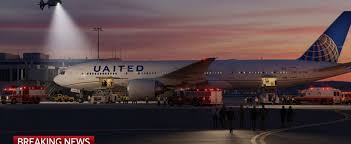
Air travel often seems routine — people board, settle in, tighten seat belts, and before long they’re airborne heading to destinations far and wide. But sometimes, the unexpected happens. On May 27, 2025, travelers aboard united airlines flight ua770 emergency diversion found themselves in one of those moments that remind us just how seriously safety is taken in the skies. What began as a transatlantic journey from Barcelona to Chicago turned into an emergency diversion to London’s Heathrow Airport — and the incident quickly became widely discussed in aviation circles.
In this article, united airlines flight ua770 emergency diversion we break down what happened, why pilots made the decision they did, and what passengers experienced during one of the most dramatic diversions in recent memory. Let’s step inside the story and explore the lessons it holds about modern aviation safety.
What Was United Airlines Flight UA770?
united airlines flight ua770 emergency diversion was a scheduled long‑haul service operating between two major international hubs: Barcelona El Prat Airport and Chicago O’Hare International Airport. The flight was operated using a Boeing 787‑9 Dreamliner, an advanced wide‑body aircraft designed for long distances with efficiency and passenger comfort in mind.
On that May day, the aircraft was carrying approximately 257 passengers along with 12 crew members. Everything seemed normal as the plane climbed to its cruising altitude over European airspace. But approximately 90 minutes after takeoff, the flight’s routine changed drastically.
How the Emergency Started
At around 37,000 feet, the Dreamliner’s sensors detected what appeared to be an anomaly in the aircraft’s cabin pressurization system — the system that ensures passengers and crew can breathe comfortably at high altitudes. While there was no actual sudden loss of cabin pressure and oxygen masks did not deploy, the aircraft’s warning systems alerted the pilots to a potential issue.
In aviation, any sign of a pressurization problem is taken extremely seriously. Even a false alarm must be treated as genuine until proven otherwise, united airlines flight united airlines flight ua770 emergency diversion emergency diversion because the consequences of ignoring a real issue could be severe. Responding to a possible pressurization concern, the pilots declared an emergency, activating a special code on the aircraft’s transponder used to communicate with air traffic control that the flight is in distress.
What Does Declaring an Emergency Mean?

When pilots declare an emergency — often referred to as “squawking 7700” — it prompts air traffic controllers to give the flight priority handling. This means:
- Faster clearance to descend to safer altitudes
- Immediate rerouting if necessary
- Quick access to alternate airports capable of handling the aircraft
- Rapid coordination with ground emergency services
These procedures aren’t taken lightly. They are activated whenever crew members believe there might be conditions that compromise safety, united airlines flight ua770 emergency diversion whether it’s a system anomaly, engine trouble, a medical situation, or another serious issue.
The Decision to Divert
Once the crew issued the emergency call, united airlines flight ua770 emergency diversion air traffic control directed Flight UA770 toward London Heathrow Airport — the nearest major international airport equipped to support a wide‑body jet landing quickly and safely.
The Boeing 787‑9 Dreamliner descended at a controlled rate and approached Heathrow, where emergency services were ready on the ground as a precaution. At approximately 4:55 PM local time, the aircraft touched down safely on Runway 27R without any injuries to passengers or crew.
Passengers’ Experience Onboard
For many passengers, united airlines flight ua770 emergency diversion the diversion came as a surprise. Although there was a change in altitude and an announcement from the flight deck explaining the situation, united airlines flight ua770 emergency diversion there was no panic. Passengers later reported that crew communication remained calm and professional throughout, helping ease anxiety even as the flight diverted unexpectedly.
It’s important to understand that passengers didn’t experience dramatic events like oxygen mask deployment or sudden decompression. Instead, united airlines flight ua770 emergency diversion what they heard and felt was consistent with procedures designed to maintain comfort and control while ensuring safety.
After the Landing: What Happened Next
Once on the ground, United Airlines provided support for affected passengers. This included:
- Meal vouchers and refreshments
- Hotel accommodations for those needing overnight stays
- Rebooking assistance for continuation to Chicago or alternative destinations
Meanwhile, the aircraft underwent a thorough inspection to determine what triggered the initial warning. Modern aircraft are built with multiple redundant systems and diagnostics, meaning that sensors and monitoring tools can often identify issues before they escalate. united airlines flight ua770 emergency diversion This incident highlighted how these systems function as an early warning rather than a sign that something catastrophic has occurred.
Why It Matters: Safety Above All
What made the united airlines flight united airlines flight ua770 emergency diversion emergency diversion diversion noteworthy wasn’t just that the plane landed in London instead of Chicago — it was the way the situation showcased how seriously aviation safety protocols are taken. Pressurization issues are known risks in flight, and modern aircraft systems are designed to detect even small irregularities long before they pose a danger.
The pilots and flight crew acted precisely as trained:
- They identified a possible system anomaly.
- They communicated immediately with air traffic control.
- They declared an emergency.
- They diverted to the nearest suitable airport.
- They landed safely with no injuries.
This disciplined response ensured that passengers remained safe throughout the event — exactly as aviation safety protocols are intended to work.
Lessons for Travelers
If there’s a takeaway for passengers and frequent flyers, it’s this: diversions, while unsettling, united airlines flight ua770 emergency diversion are part of an airline’s comprehensive safety system. They are not signs of failure, but rather evidence that checks and balances work as designed to prevent potential dangers from becoming real ones.
Here’s what flyers can keep in mind:
- Aircraft systems monitor many variables at once.
- Pilots and crews train constantly for emergencies.
- Emergency codes like “7700” trigger coordinated responses.
- Diversions prioritize safety over schedule or convenience.
These protocols exist in every modern airline flight around the world. While no one wants to experience a diversion, it’s reassuring to know how robust and practiced the responses are when flights encounter unexpected scenarios
Conclusion
The emergency diversion of united airlines flight ua770 emergency diversion stands as a prime example of aviation safety systems functioning exactly as intended. A possible cabin pressurization anomaly triggered an emergency declaration, and the flight was safely diverted to London Heathrow Airport without injury to anyone onboard.
For passengers, what might have felt like an abrupt turn of events was, in reality, a well‑executed response by trained professionals who prioritized safety above all else. These rare incidents remind us that in aviation, caution is always better than regret, and that the systems and people responsible for every flight are equipped to handle the unexpected.
Whether you’re a frequent traveler or planning your first long‑haul flight, the story of UA770 offers confidence that modern air travel is built on a foundation of vigilance, training, and care — even when things don’t go exactly according to plan.
Frequently Asked Questions (FAQs)
1. What exactly triggered the UA770 diversion?
Flight UA770 diverted after sensors indicated a potential issue in the cabin pressurization system, leading the crew to declare an emergency and redirect to the nearest suitable airport.
2. Was anyone hurt during the emergency diversion?
No. All passengers and crew landed safely in London without injuries.
3. Why do pilots declare an emergency instead of waiting to check the issue?
In aviation, potential issues related to pressure and environmental systems are treated with caution because they can escalate quickly. Declaring early ensures maximum safety.
4. What does “squawk 7700” mean?
It is an emergency transponder code used to alert air traffic control that an aircraft has a serious in‑flight issue requiring priority handling.
5. What support do passengers receive after an emergency diversion?
Airlines typically provide meals, accommodations, and rebooking assistance when a flight diverts due to an emergency safety issue.
